
2012 is the Year of the Girl

100 years ago today, Juliette Gordon Low called her cousin and said “I’ve got something for the girls of Savannah, and all of America, and all the world, and we’re going to start it tonight!” She gathered 18 girls that night to form the first Girl Scout troop in the U.S.

Today, the Girl Scouts of the USA has a membership of over 3.2 million girls and adults. And, nearly 60 million American women, including me, are Girl Scout alumnae — once a Girl Scout, always a Girl Scout.

A few weeks ago I read an article in Fast Company about Anna Maria Chávez, CEO of Girl Scouts of the USA, and the innovative ideas the Girl Scouts have introduced – ideas I’ll return to in a future post. This new PSA video, The Best in Me, is really what got me excited again about the Girl Scouts. Go watch it and come back.

Girl power!

The videos are part of a campaign, To Get Her There, designed to “focus national attention on girls and the issues they face.” The multi-year advocacy and fundraising effort “will seek to create balanced leadership — the equal representation of women in leadership positions in all sectors and levels of society — within one generation.”

Chavez says: “Girls represent an incredible resource for our country and Girl Scouts has always provided them a platform for success, and during our centennial we want everyone—men and women alike—to join us in making sure that every girl achieves her full leadership potential.”

As one of my friends said today on Twitter, Girl Scouts is about more than selling cookies. That’s right, it’s about skill development, community service and, most importantly, leadership. I had my first leadership experiences in Girl Scouts. My fondest Girl Scout memory is being a patrol leader in Cadettes.

My Cadette troop leader, Rachel Hardin, was awesome. A middle school science teacher, she was also a rugged outdoorswoman who taught us how to light fires without matches, lash together log sleds and a bunch of other survival skills. We camped all through the year, even on snow during the Boy Scout-Girl Scout winter jamborees. We didn’t do everything by the official rulebook, as a matter of fact, I never even bought the Cadette handbook, but those leadership skills were embedded in me. Just don’t ask me to lash together a sled.

Support your local Girl Scouts. Stop at that table outside the supermarket and buy a few boxes of cookies. Encourage young girls to join a local troop — help them become our future leaders.
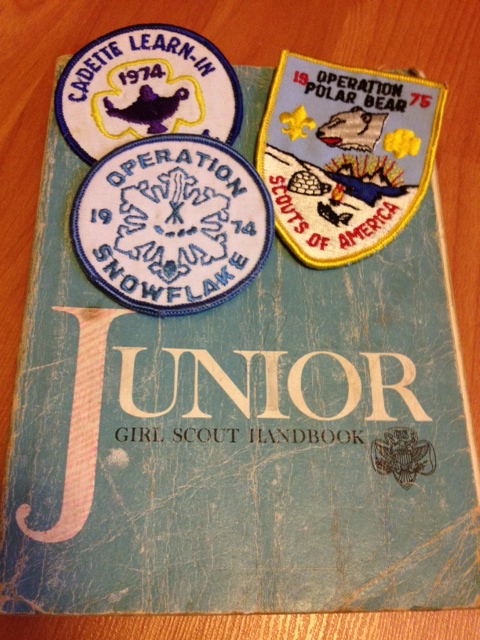
A few of the many badges not sewn on my sash because our Cadette troop didn't wear uniforms. Rebels and leaders!


Adapt or Die

Brian Solis, in his post, The Importance of Brand in an Era of Digital Darwinism, talks about tone-deaf brands like Netflix that didn’t engage with customers and didn’t monitor social network conversations, consequently screwing up and losing their customers’ trust:

“Brands that fail to instill this level of confidence in consumers run the risk of falling to digital Darwinism. The brands that survive this era of economic disruption, will be the ones that are best able to evolve because they recognize the need and opportunity to do so, before their competitors.”

I wonder how many associations still think it’s business as usual. Many of the large national associations get it, but what about the smaller ones or state associations? They’re not reading the industry blogs. Just what are they reading? Anything? Many of them don’t belong to ASAE, and even if they do, are they paying attention?

Their boards don’t know any better. Why would they? They’re not association professionals.

Sometimes I feel like I’m mourning a patient that doesn’t even know it’s dying. It’s sad. A stupid loss.

The state SAEs, heck, everyone who cares about associations, can’t reinforce this message enough:

“What separates brands that fall to digital evolution from those that excel is the ability to recognize the need for change and the vision to blaze a path toward renewed relevance among a new generation of consumers.”

It’s no different for associations. As Solis says, #adaptordie.

Microvolunteering: More Opportunities for Member Engagement

“I wish I could, but I don’t have the time.”

Are you hearing that more frequently? As life becomes more complex, members have more options for spending their time and, consequently, more demands on their time. Juggling their work, family, and social lives with association service isn’t as easy as it used to be. The traditional membership experience—volunteering for committee and board service—requires a commitment of time and energy that many are no longer able or willing to give.

“The younger generation will change the dynamic of the membership and volunteer experience,” predicts Jill Eckert McCall, director of the ABA Center for Continuing Legal Education and past chair of the Chicago Bar Association Young Lawyers Section. “We want to engage and serve in ways that are very different than generations before us. We don’t just give lip service to work-life balance; we actually go out and get it.”

Bar associations have the opportunity to provide an alternative volunteer path for those of all ages who want to get involved, give back, and have a meaningful membership experience, but on their own terms.

Read the rest of my article about microvolunteering at the American Bar Association’s Bar Leader magazine website.

New Association Benefit: Social Dining

Have you heard of GrubWithUs? I hadn’t until I read this Fast Company article. GrubWithUs is a social network that arranges dinners with strangers at restaurants. You pay everything in advance, show up, have a most delightful time while getting to know several new acquaintances.

I would have LOVED something like this when I was single. Not so much to meet guys, although that wouldn’t have hurt, but as an easy way to hang out with new people for a few hours around a dinner table. I love that type of thing, especially when food is involved.

We had Meetup groups in Sacramento that did something similar, but the dinners usually attracted too many people. After a while, all the faces became a big blur — too much networking, not enough real conversation.

One of the top reasons people join associations is to meet and develop relationships with peers or prospects. Associations facilitate this by hosting conferences, volunteer opportunities and other events. Why not try the GrubWithUs model — small dinners for six to eight people? Here are some ideas:

  • During conferences and other meetings, like many associations do.
  • By geographic area for local members.
  • By conversation or brainstorming topic — pay for someone’s dinner and ask them to report back on ideas shared — market research!
  • By professional niche or interest.

Don’t focus on excuses to not do it – handling payments, staff time — you can find ways to make it work if you really want to.

The accounting department may have to become more nimble to pay the restaurant in advance, but it’s the 21st century, the age of PayPal, debit cards and taking care of business.

You might have to rely on volunteers. Thank them by paying or subsidizing their check, or giving them a promo code for an event or product.

Not everyone can afford to attend your conference to meet other members, but they will surely appreciate you making the effort to organize or facilitate member meet-ups.

Game Thinking: An Epic Win for Associations

I hear you. “Games, yes! It’s about time we looked at games.”

And I hear you too. “Games? You can’t be serious. Not at my association.”

Full disclosure, I’m not a gamer, so this is all a bit foreign to me too. I first started paying attention to games two years ago at a TEDx conference where I heard an IBM game designer talk about using games for training and education. Ever since I’ve been intrigued by the idea that game thinking can help associations deliver a better experience.

I’m not the only one. Game dynamics was the topic of last week’s #assnchat.

It’s tempting to dismiss any consideration of games by saying members are serious professionals and wouldn’t go for those shenanigans, but they do.

Games are the most downloaded apps. 72% of households play computer or video games. The average gamer is 37 years old. 42% of gamers are women. 55% of gamers play on their phone or hand-held device.

Here’s what I’m wondering: how can we leverage the principles of game design to make the membership experience or professional development journey more meaningful, or encourage online community participation?

Please read the rest of this post at the Avectra blog.

Changing My Little Worlds in 2012

Here I am, running to catch up to the Change the World in 2012 meme that every other association blogger has jumped on already. Two weeks ago I was tagged by Aaron Wolowiec and Elizabeth Engel to give my take on Maddie Grant’s original post, a wildly popular one.

So where have I been? I’ve been thinking! I didn’t make resolutions this year. Instead, I took my own advice: I’m slowly changing my habits. I’m living the life that the better me would live: committing to daily exercise or yoga, eating more nutritious foods, using my time more effectively (meaning: be more focused), flossing regularly, going offline more frequently, and spending time with friends more often.

Now it’s out there. Accountability. It’s only been three weeks but I’m doing okay. Slow and steady.

What’s this have to do with changing the world? I’m not setting out to change the world, but I’d like to make a difference in the little worlds I live in. A better me can do that, a lesser me would think she’s too busy.

I never aspired to be famous or rich, or even leave a legacy, but I want my life to matter. I want to be a positive presence in the lives of others by being a better me and a better girlfriend, friend, sister, daughter, cousin, aunt, colleague and acquaintance.

How will I make a difference in my little worlds?

1.  Be grounded, curious, grateful, conscientious and accepting. In short, be everything yoga books, podcasts and teachers prescribe. I’m inspired by how others live their lives, so I hope to be a positive influence for those in my little worlds, whether they’re close to me or far away, in person or online. We’re all works in progress, writing our own story, a story that can change direction when another character enters the room.

2.  Share what I know, learn and think if I believe it will help others. I’m approaching this from two angles.

  • Practical: I like being a resource, so this is easy. I really should have been a librarian, but I like to talk too much. What I really want to do is spark excitement, energy and hope in others. I try to do that with my professional writing, especially for the association community. I want to help people see things from a different perspective, come up with a new idea, solve a problem or improve their professional lives. I’m doing that as a newly trained volunteer docent for kids at the North Carolina Museum of History, shifting their perspective and sparking their curiosity about life here in NC in the past centuries.
  • Woo woo: We teach what we need to learn. We’re not very good students because we keep having to learn the same things year after year: choosing our reactions, really listening to others, living in the present, and not judging a whole character based on one trait.

3.  Connect people who would benefit from each others’ company — a very satisfying thing to do if you keep your eyes and ears open for opportunities. Of course, it’s easier if you’re out there meeting people and, more importantly, learning about them instead of talking about yourself (note to self). I can do this professionally as well: my writing helps companies connect with their audiences, so they can live happily ever after together.

Thanks Maddie, Aaron and Elizabeth for writing your posts and inspiring me to put this out there. Thanks to all my other friends and colleagues in the association community for sharing your intentions for 2012. When we all live our better lives together, we’re an awesome and inspiring bunch.

The Mark of Cain on Association Management

The last few nights I’ve watched news stories about Herman Cain and the National Restaurant Association (NRA). I can’t help thinking about the whole ugly situation through an association management lens. I’m not going to dive into the details or the political ramifications, and I certainly don’t intend to express any political opinions in this post. I’m assuming the best and the worst to get a complete picture for purely hypothetical reasons.

Imagine, instead of the NRA, this is your association. A never-ending story about one of your past CEOs (or elected volunteer leader) ends up on the nightly news. I’m sure it’s happened before, but I doubt the past CEO was running for president.

I feel bad for the NRA staff. You know everyone there is getting the third degree from their family and friends. Even though they’re in the spotlight dealing with a haunting situation from the past, work goes on — trade shows, educational sessions, publications, lobbying, research, event planning, member service – it doesn’t stop.

The story is still unfolding but I can’t wait. I keep thinking about all the issues it raises. It provides an opportunity to step back and say, “What if this was us?”

Crisis management

Above all, it’s a story about crisis management and communication. I haven’t been paying close enough attention to know how the NRA has handled that, but I’m not writing about them, so it doesn’t matter for my purpose. Every PR professional and CAE candidate knows you need to have a crisis management plan, just like you need disaster recovery and business continuity plans.

You also need to be out in front when a crisis hits. With social media, it doesn’t take long for a rumor to turn into a full-blown disaster. Even if you’re not participating in social media, you better be monitoring social media. You’d think everyone would know this by now, but I’m sure there are some organizations that don’t even have Google Alerts on their name.

I can only imagine the tension at NRA. I’m sure the HR and executive teams are in constant meeting mode. How stressful. I hope, for their sakes, they’ve been as open and honest as much as their confidentiality agreements allow. We see how Cain suffered because he didn’t appear as forthcoming and transparent as he should have.

Make sure your staff is informed about their roles and responsibilities during a crisis and they know what’s at stake for the association mission and members. At NAHB we had an ugly episode: someone on staff was hounded by an angry group for his part on a non-profit board – a board completely unrelated to the homebuilding industry. We expected protests and media at our front door. I don’t recall anything awful occurring, but we were ready. Everyone was informed enough to understand the situation and reminded about what to do if approached or contacted by anyone.

Brand management

I got really peeved off by some of the coverage of the NRA, especially when a ratings-hungry commentator portrayed the NRA only as the representative of national corporations, like McDonalds and Pizza Hut. He called for viewers to boycott NRA members while showing a dozen member logos (mostly fast food) and a headshot of NRA’s CEO. I guess he doesn’t care about all the employees whose earnings depend on those chains. I’m sensitive about this because I know from personal membership experience that NRA also represents, assists and educates smaller restaurants, like the independently-owned one I used to manage.

No matter what you think about the NRA, brand identity is the issue here. Is it clear from your homepage and other online outposts who your members are? What they contribute to the economy and community? Could you appear more human? Relatable? Likeable? Don’t be an easy target for rabble-rousers.

Culture and counsel

Innocent or guilty, the fact that there were three allegations of sexual harassment has to give you pause, even if they’re all baseless. I can’t help thinking, what type of culture leads to this? Or maybe all was well and this is just a case of three messed-up work relationships and the resulting misperceptions. One commentator asked Cain if he was the kind of CEO who made awkward comments to employees and didn’t know it. For the record, he did say “no,” but seriously, would he even know?

If those allegations were true, why didn’t anyone say anything to him about how others perceived his behavior? Because he’s the boss? Bring in the board chair to counsel him.

It’s an ugly situation. Maybe someday a brave soul from the NRA will do a conference session about how they handled it and lessons learned. Yuck. I wish everyone over there a hasty return to business as usual.

What other association management lessons are you seeing in this story?

Be Productive While Having a Beer (or Two)

Five o’clock on Friday afternoon, it’s been a good day. Most of the items on your daily to-do list have been crossed out. However, you’re getting your usual late afternoon second (or third?) wind. Your brain is still clicking. You could put in a few more hours of work.

Then a thought rears up in your mind, or is it a little devil on the shoulder? Wouldn’t a glass of beer or wine taste good right about now? Yes, it would. It would be especially good with that pimento cheese in the refrigerator. What to do, what to do…

The beauty of a home office, the refrigerator is just steps away. But now you’re torn: stop working (it is the weekend after all) or relax with your favorite refreshing brew while getting a bit more done.

You can have it all. There are plenty of productive tasks you can do while enjoying a beverage. Or two.

Thank you cards. You send thank you cards, don’t you? No, it’s not passé. Take a sip and shop online for handmade cards. Etsy’s a good place to start.

Addresses. Save time later by hunting down the addresses you’ll need for those thank you cards. But don’t write the cards. No no no. No permanent writing is allowed right now.

Read. Expand your mind by reading blogs and websites outside your niche. If you’re a blogger, jot down post ideas. Take notes. Doodle. Get inspired. Make connections between random ideas.

Listen. Listen to podcasts. I like catching up on NPR shows I’ve missed, like Fresh Air or This American Life. What do you like?

Tidy up. While you’re listening to the podcast, clean and organize your desk. Clutter has such bad juju. Clean your dusty computer screen and crumby keyboard. But move your beer first. A tipped over beverage can lead to a short-circuited keyboard. It’s not important why I know this. While you’re at it, does the floor need a sweep?

Organize. Start your to-do list for next week. Jot down some of your big ideas for the future.

Tweet. Twitter’s great for conversation and random reading. Find an interesting hashtag to search and read. But please, no drunk tweeting. Stop after two beers. You’ll thank me later.

Emails. If you really want to be productive, draft emails you need to send, but don’t enter the email address into the To field and don’t even think about sending them.

Inbox. Power through your inbox. Delete the crap. Skim or read the newsletters. Mark things to read later.

Play. Exercise your creative muscle. Write in your journal. Make a visionboard (oops, I just lost half the crowd). Or do whatever creative hobby you practice.

Draft. Draft articles, reports, letters or blog posts about productive things you can do while having a beer with pimento cheese and crackers. Edit and publish later.

What productive work-related things do you do while you’re enjoying a beverage?