ASAE Annual Exhibitors Miss Another Opportunity

Yesterday, one of my friends started a conversation on Facebook about all the post-show emails sent by ASAE Annual exhibitors. We’re not receiving nearly the deluge of emails that go out before the show, but, once again, many of these emails are missing the mark.

Segment your list.

You scanned badges. You know the names of the attendees who visited your booth during the show, right? So why are you telling someone who didn’t come to your booth:

“Thanks so much for stopping by our booth at ASAE in Detroit. We enjoyed visiting with you.”

How do you think an email like this goes over with an association exec who didn’t visit your booth? I’ll tell you: not well. It’s a sloppy and lazy example of the “spray and pray” tactic.

Next time, segment your list. Send a “thank you” email to the attendees who really did stop by your booth and send a “sorry we didn’t get to meet” email to those who didn’t–but only if they’re truly prospective clients. Have you done that research yet?

Offer value, not another sales pitch.

Only two post-show exhibitor emails in my inbox offered anything of value.

  • One was titled, “How Associations Can Grow Membership and Generate More Revenue,” and linked to a blog post about one of their key take-aways from the conference.
  • The other was titled, “Association Challenges Uncovered at ASAE,” and linked to three posts about those challenges.

As I wrote in my post about pre-show exhibitor emails, you have been given access to an association exec’s inbox—don’t blow it. Use this opportunity to be a resource. Don’t take advantage of that privilege by using it only as one more chance to sell. Most of these people aren’t ready to buy!

Stop relying on drawings.

I understand you want to attract people to your booth, but how qualified are those leads who only visited because they want to win an Apple watch? And you’re still pushing that watch!

I really wonder how many association execs with decision-making authority notice who’s giving away prizes. They’re not going to the expo floor to enter drawings. They’re going to the expo floor to learn about the latest in online learning technology or mobile apps.

Become an ally.

The association executive crowd can sometimes be prickly about vendor outreach—if you’ve seen some of the discussions in ASAE’s Collaborate community, then you know what I mean. I wrote a post about a phrase that might sound familiar to Collaborate regulars: “No Vendors, Please.”

Why do so many association execs have this attitude? Because too many vendors don’t understand how to develop relationships with association execs. And, relationships are the foundation for sales.

Lead with value. Take a consultative approach. Be a source of information and education. Get to know your prospects—their challenges, problems, frustrations, and aspirations. Help them solve problems. Be a positive, valuable member of the association community.

If you’re going to send out blast emails, do it wisely. Sad to say, you will stand out if your emails deliver value to association executives because so few take that approach.

I hope any vendors out there take my suggestions in good spirit because I share them in goodwill. I’m on your side.

(Creative Commons licensed photo by Bark)

The ASAE Annual Exhibitor Email Deluge

association execs don't want promotional emails from exhibitors

Every year, when I register for the ASAE Annual Meeting, I check the box to receive emails from exhibitors. As a writer and content marketer, I like seeing how vendors in my community use email marketing. Some of them do it well, but some, oh boy, they really blow it.

The list ASAE provides to exhibitors includes association execs and staff as well as consultant members like myself. Ideally, an exhibitor would scrub and segment this list because it includes people with a range of positions and needs. For example, a company selling learning management systems shouldn’t waste their time sending emails to a government affairs professional.

The association execs on this list represent a wide spectrum of associations with different membership models, programs, financial resources and history with the exhibitor. Someone who works for a home builders association has no interest in an abstract collection tool. A person who just saw a demo of your system shouldn’t receive a generic email explaining what you do.

Deliver value in return for your inbox privilege.

These attendees have given exhibitors permission to enter their inbox—quite a privilege. Next time you talk to an association exec, ask her how many emails she gets a day. What percentage does she leave unread or delete?

You have a terrific opportunity to be of service and stand out from the pack. Don’t waste this opportunity with a promotional email that only describes who you are, what you sell and what booth you’re in—all forgettable information. Nobody cares about any of that except people in the later stages of the selection process, and they already plan to visit exhibitors who sell what they need.

Instead, use this opportunity to be helpful. Assuming you know your target audience, share something of value. Share educational content that helps execs improve a process, solve a problem, or learn more about a challenge.

For example, if you sell email marketing systems, provide a few tips for getting more emails opened and a link to a blog post that explains more. Sign off with a reminder that you’re exhibiting in booth X at the show and would love to share more tips in person.

Remind attendees why they’re receiving your email so they don’t mark you as spam. Say something like, “You’re receiving our tips because you opted in to receiving emails from exhibitors during the ASAE Annual Meeting registration process.”

Be a good community citizen.

Stick to your agreement with ASAE. I’m guessing you have permission to send this group one email before the show and one email after the show. Comply with that agreement. Just because someone gave you their email address (or business card) doesn’t mean you have their permission to add them to your email marketing list—you don’t, that’s spammy behavior.

If you want to add someone to your email marketing list, send them one targeted email with educational content that helps them solve a problem or improve a process. Near the end of the content, insert your “call to action,” in this case, ask them to opt in to your list. You could say, “If you would like more tips for [the topic of your valuable content], please subscribe to our bimonthly newsletter.” If they don’t opt in, remove them from your list.

If you’re not in the email business, learn more about sending emails that will get noticed, opened, and acted upon. Visit the sites of your colleagues who blog about email marketing, for example, Informz, HighRoad, and Real Magnet. Look for posts on email subject lines, formatting, and calls to action.

You’ve been given access to an association exec’s inbox. That’s a big deal. Now, you have the opportunity to show them what kind of partner you would be. Will you be focused on her needs and help her solve problems, or will you be self-absorbed?

(Creative Commons licensed photo by Bark)

Does Your Organization Pass the Toothbrush Test?

Before Google makes an acquisition, the target company must first pass co-founder Larry Page’s toothbrush test:

Is the company’s product or service used regularly to make people’s lives better?

How does your organization live up to that test?  Do your clients or members depend on something you provide to do their jobs? Does that product/service improve their professional or personal lives? Does it help them reach their goals?

If not, it’s way past time to research your market, talk to people and find out how you can meet their needs in a way that no other organization can.

If you do offer a “golden toothbrush,” can your clients or members get that same product elsewhere? If they can, what makes your offering so different or special? Why would they have a relationship with you?

Does your marketing copy brag about this product? Do you show how it can improve their lives? Do you provide proof – a testimonial or case study?

Attention, loyalty and dollars go to those who deserve it and prove it, day after day.

For more on Google’s toothbrush test, read Google has one essential test when it thinks about buying a company by Max Nisen at Quartz. 

The Most Interesting Brand Spokesman in the World

Every time The Most Interesting Man in the World advertisements for Dos Equis beer come on TV, we stop talking mid-sentence and listen. We can’t get enough of him. We love that guy.

Everyone loves that guy. Since Dos Equis first introduced the campaign, their U.S. sales have increased 22%, while other imported beer sales fell 4%. The Dos Equis Facebook page has 1.6 million fans. I’m telling you, it’s the Man.

Dos Equis is going after the same market as all the other gargantuan domestic and imported beer brands: young guys. Not me and not the middle-aged guy watching TV with me. So why are we so captivated?

The commercial’s unexpected sophistication and wit gets our attention. Its smooth music and vintage video clips and photos add a hip yet classic feel, distinguishing the campaign from the other frat-boy brands.

And there’s the Man himself. I may not want a relationship with him, but I’d sure like to spend an afternoon on his boat followed by dinner and dancing. Come on ladies, you know that’s true.

What young guy wouldn’t aspire to be like him? He has what they want: a life full of experiences that sets him apart from other men. The Man is a great example of aspirational marketing.

Good stories capture our imagination by making an emotional connection. In the Most Interesting Man in the Word campaign we meet a worldly character with an air of mystery and authority, sort of an Ernest Hemingway meets Sean Connery. We get a peek at his jet-setting life of adventure and are teased with just enough to make us want to know the rest of his story.

As if the fictional Man wasn’t interesting enough, the actor who plays him, Jonathan Goldsmith, has also led an autobiography worthy life: “rescuing a stranded climber on Mt. Whitney, saving a drowning girl in Malibu, sailing the high seas with his friend Fernando Lamas.”

The witty commentary accompanying the Man’s exploits takes Chuck Norris-isms to a more cosmopolitan level:

  • “Running in place will never get you the same results as running from a lion.”
  • “At museums he is allowed to touch the art.”
  • “The police often question him, just because they find him interesting.”
  • My favorite, on manscaping: “I have no idea what this is.”

The Man’s parting line is recitable: “I don’t always drink beer, but when I do, I prefer Dos Equis. Stay thirsty, my friends.” Many viewers think, “Hey, I don’t always drink beer either, I should give Dos Equis a try.” Brilliant.

The money question: do the ads compel the viewer to take action? The sales figures say yes, and I also have personal proof. Someone I know, not a young guy (sorry, honey), occasionally strays from his usual brand and brings home a six-pack of Dos Equis.

Get to Know Your Customer: An Alternative to Vulcan Mind Melds

I get my ideas for articles and blog posts by thinking about readers. Yes, you, you’re always in my thoughts. I think about how I can help you solve a problem or make your job (or life) a little bit easier. Or I aim to share something interesting and valuable.

When I begin work on a copywriting project, I also think about the ultimate readers — my client’s customers, prospects or members. I can’t communicate effectively to them unless I first get to know them. If only I had Vulcan mind meld skills, this part of my job would be a lot easier. Instead I rely on consultation with my client and lots of research and reading.

Studying customers is only the beginning, but let’s stop there for a moment. What if you’re on your own without a marketing vice president or a freelance writer, what do you do? Like me, you must completely understand your customers before you can determine how best to communicate with them.

I’ll share with you some of the questions I usually have; perhaps they’ll help you create a list of your own.

First, create a descriptive profile for each type of customer (or member) you serve. Heck, give each one a name too. If your customers are businesses, the profile will include characteristics that a consumer profile wouldn’t, and vice versa. Here are some suggestions to start, but you’ll end up with others specific to your business:

  • Location
  • Age
  • Gender
  • Employment status
  • Marital or family status
  • Interests and hobbies
  • Lifestyle
  • Purchasing history
  • Memberships
  • Career stage
  • Position in organization
  • Role in purchasing process
  • Place in conversion process
  • Educational background
  • Comfort with technology

The most interesting part of customer research comes next – the big meaty questions. Again, these will vary depending on your business. Since I usually work in the business-to-business sector, my questions have that slant.

  • What are your customer’s biggest problems at work?
  • What keeps her up at night worrying and stressing?
  • What does she fear?
  • What annoys her? What frustrates her?
  • What would make her life and job much easier?
  • What does she yearn for?
  • Why does she have these problems? Why aren’t these problems solved yet? What are the obstacles to solving them?
  • How do prospects like her usually find you?
  • What type of questions do your prospects and customers frequently ask your sales, social media and customer service staff?
  • What do they search for on your website? What search terms bring them there?
  • What hurdles (mental or real) prevent them from taking the next conversion step?

Spend some time where your customers hang out – blogs, forums, Twitter chats, face-to-face meetings, radio shows or podcasts – so you can get a sense of the language they use and their industry’s or profession’s culture.

The whole point of this exercise is to get into your customer’s mind to understand their perspective and needs, so you can connect their desires or worries to a solution you provide.

There are many more questions I must answer before I start writing, but that will be a topic for another post.

Even a Small Staff Can Blog

Admit it, you like reading blogs, don’t you? You subscribe by email or RSS feed and you get valuable and interesting content delivered daily to your computer. How convenient! You receive tips and advice, read about hot issues and learn about resources that help you do your job or get ahead in your profession. Wouldn’t your members like that?

A blog provides news, information and thought-provoking ideas – a professional development trifecta. It’s the ultimate content marketing tool – engaging your readers with valuable information that holds their attention and strengthens their loyalty. A blog educates policy-makers, journalists and other influencers about your legislative and regulatory issues. A good blog establishes your association as a thought-leader in your industry.

Google loves blogs and their keyword-rich pages. Because of their dynamic fresh content, blogs rank high in Google indexing. Blog posts are sharable. They’re sent to colleagues via email, or shared on Twitter, Facebook or LinkedIn. Your association’s reach and influence expand via Google and social media platforms.

Blogs are social. Your members participate in the conversation you start by commenting back to you and each other. Blogs have more personality than websites. They have a real person’s voice, or many people’s voices. You can play it straight by providing serious information, and also be entertaining with lighter posts and videos.

Can you manage a blog?

Even a small staff association can manage a blog by publishing repurposed and curated content in addition to original content.

You can get content in several ways:

  • Create original content. Don’t worry, you have access to more content ideas than you’d expect. Trust me, the more you write, the easier it gets.
  • Repurpose existing magazine, newsletter, educational session, blast email and political alert content.
  • Ask members to contribute a monthly post. Look for bright members who want visibility. If they don’t write well, edit their work or outsource the editing. If their writing is hopeless, film them.
  • Ask industry bloggers to contribute monthly guest posts.
  • Outsource content creation to freelance writers.
  • Do a mix of all of the above.

Content can also be collected from other sources, reviewed and curated (filtered) to find the most valuable and interesting posts for your members.

How do you begin?

Start by regularly reading industry blogs to get a feel for the community and issues. Also read social media blogs to learn more about managing and marketing a blog.

Put together a staff team, or a team of members and/or industry thought-leaders overseen by staff, to develop an editorial strategy. Review your communication, marketing, professional development, membership, advocacy and public relations goals. How can your blog help achieve those goals? Don’t operate your blog in a silo. It must be an integral part of all those association programs.

Discuss how you will handle negative or critical comments. Censoring is only an option for extreme cases – spam, libel or vulgarity. Socialfish recently shared an excellent social media response triage flowchart.

Create an editorial calendar so your posts enhance other association efforts.

Always have a full pipeline of posts so you can at least publish weekly.

However, blogs need daily attention. Even if you don’t post daily, someone must review comments and reply back, share your posts and posts from other sources on social media platforms and, ideally, comment on other industry blogs. Like content creation, this can be done by staff or outsourced.

If staff sets the blog’s strategy and calendar, content can be created and collected using a combination of talents. The effort required to oversee this educational, community-building and marketing tool will be well worth it.

(A version of this post was originally published on Splash: Refreshment for Your Small Staff Organization)


What It Takes to Plan and Host a Conference in Only 46 Hours

In how many hours? Yes, 46 hours, according to my calculations. Sounds impossible? It can be done. As a matter of fact, it happened this week after the American Society of Association Executives (ASAE) had to cancel its annual Technology Conference.

The conference was to start on Wednesday with exhibitor move-in and pre-conference workshops, but DC was still under nearly two feet of snow from the weekend’s storm and was due to get one foot more in blizzard conditions on Wednesday. Airlines were already canceling flights. Some attendees and exhibitors got to town on Tuesday before everything shut down but many were still stuck at home. Even many of those based in DC were still snowbound due to impassable roads and no Metro or train service above ground.

On Tuesday morning ASAE announced via Twitter that it would make a decision by 3:00 p.m. as to whether the conference would be canceled. That’s when the member community started working on Plan B. Later ASAE announced their decision to cancel, the right thing to do considering the conditions. Immediately after, Maddie Grant and Lindy Dreyer of Socialfish blogged about UnTech10, Plan B, an unconference that a team of members had quickly started organizing.

On Thursday, 75 attended UnTech10 in person and 425 attended virtually via a live stream (live webcast) of the programming. I didn’t have the time or budget to go to ASAE’s Technology Conference, but now I was able to “attend” UnTech10 for several hours on Thursday. It was an intellectually stimulating afternoon, time well spent. On Friday, although there wasn’t an on-site component, a full day of webinars was scheduled for the virtual audience.

What do you need to pull off something like this? Here’s what I learned from Maddie and Lindy’s post about organizing it.

You need word of mouth (or mouse) marketing. Most of the marketing for UnTech10 was done via Twitter. A hashtag for the conference was created (#UnTech10) so members could follow that stream of tweets to keep updated. Keep your tweets short enough so that others can retweet them. Vendors also notified clients via email.

Create a Facebook fan page. Although UnTech10 didn’t do this, I saw several references to UnTech10 in my Facebook News Feed as friends shared the original Socialfish blog post.

Create a buzz-worthy email and ask your members to forward it to those they know in the industry or profession. Give clear instructions on how to register and compelling reasons on why they will want to participate. Don’t scare them off by using only technical lingo. This is user-friendly technology, like watching TV!

Contact affiliated or friendly organizations for help in spreading the word. Provide copy and links that they can use to share the news. If you create a sense of buzz and excitement about something, it will go viral if you make it easy for others to help you.

Create a central hub for handouts, schedule, instructions on how to participate and an archive of webcast segments. Content experts were asked to submit program ideas to a wiki. The organizers created a full day of on-site programming (that was live streamed) for Thursday and a full day of webinars for Friday.

Most importantly, you need a community – good relationships with vendors who can help you pull it all together – vendors that will contribute staff to work with you and free services and/or funding for other expenses. This organizing team will take charge and make it happen. According to Maddie, each company on the UnTech10 team had an area to oversee:

You can do this. You can do this if your event is threatened by weather or other unforeseen circumstances. You can certainly do this if you have more time than the UnTech10 team had. They were able to pull it off because they had relationships based on existing trust. Trust that everyone would work together and do their best for the right reasons. The team stepped up and made something excellent out of an unfortunate situation and provided a meaningful experience for our community — an experience that many of us would not have had otherwise.  Because of the generosity and hard work of my fellow members, now I had a chance to grab several hours of education and online networking with other members. This is what a real community does. Does your association have that kind of community?

Trade Show Swag: the Good, the Bad and the Ugly

We had a lively #assnchat on Twitter yesterday about trade show booth giveaways. I volunteered to write a summary, not realizing it would turn into the longest blog post ever. However, there’s lots of good information here from tweets and suggestions I received from Facebook and Twitter friends.

If this post isn’t enough and you want help choosing the best promotional product for your next trade show, check out Heidi Thorne’s book, SWAG: How to Choose and Use Promotional Products for Marketing Your Business.

Many of us agree on what we like to take home from a trade show. Shelly Alcorn raised an important consideration:  “What about sustainability? Can we give out cool things without just creating more junk?” Jeff Hurt recommended “contacting PPAI, the association for promotional products professionals, for green sustainable and unusual ideas.” Some of the greener ideas mentioned were:

  • Seed packets, but not for expos overseas. We like handmade paper seed packets or coasters that bloom into flowers when buried. Joe Flowers mentioned seeds that grow into “a plant with a one-word slogan on them. Very cool and geeky!”
  • Bamboo cutting boards with the exhibitor’s logo etched in — very nice.
  • Reusable shopping bags – one of the group’s favorites. They give the vendor a branding opportunity and fit the green requirement.

Vendors wants to get their brand out there, but we want good design. This is a chance to associate your brand with utility and style. We don’t want an ugly logo coffee mug, but we will take a nicely designed one, perhaps with a discreet logo on the bottom.

Dan Scheeler likes “how #tech10 posted booth giveaways in advance. I admit that will influence which vendors I visit.” 
Here’s what else we like in the food/beverage department:

  • Nalgene-type water bottles
  • Chip bag clips
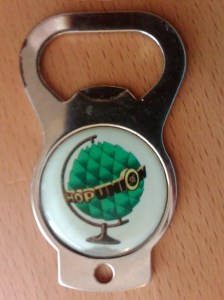
  • A buddy from my old job at CBIA suggested cork screws or bottle openers, like the kind you can keep on a keychain. Surprisingly no one during the chat made that suggestion. Makes me wonder if those from the housing industry have a stronger need for this type of swag.
  • Neoprene lunch bags
  • Wine cooler bags
  • Insulated travel coffee mugs
  • Nice-looking coffee mugs
  • Drinks, wine or beer get our attention, especially when combined with comfy seating, or bottles of wine with custom labels. Speakers like them too.
  • Mints, power bars, bottled water and good candy help us get through long days at the show.

If swag can double as a gift for kids, it makes it home — rubber duckies, stuffed animals, even caricatures. Parents like the thoughtfulness of handy souvenirs.

Personal items we like:

  • Lip balm
  • Hand sanitizer in little bottles
  • Eyeglass cleaning cloths
  • For a boomer audience, magnifier eyeglasses to read show floor maps with really tiny print
  • Attractive or cool lanyards to reuse at other shows and conferences
  • One of our trade show sponsors provided lanyards with a business card holder attached. We gave them out in our Newcomers Lounge to first-timers. The buzz about them spread on the floor and thousands of folks stopped by to get one. They didn’t have a year on them, just the show name, so we used them for several years.
  • Headshots — useful for social media profiles
  • Magnetic picture frames
  • Digital photos with friends, adding a frame is even better
  • Retractable headphone/earbuds
  • Golf tees and ball
  • Keychain flashlights
  • Brightly colored luggage tags — however, luggage handle wraps got a thumbs-down. Sandra Giarde saw some particularly ugly ones that said, “I’m going to the (name removed to protect the stupid) Show!” Hmm, do you really want to announce you’re here for a convention and a likely mark for price-gouging and god knows what else?
  • Small travel mouse with retractable cord
  • iPod wraps
  • Sturdy messenger or gym bags without any tacky branding
  • Drawstring backpacks

Pens get mixed reviews. Pens with a thumb drive are okay. Dave Coriale said these bobblehead pens are big movers at his booth. A friend gives out the same logoed pens at his booth, and likes them because they double as gifts for kids. Elizabeth Derrico sent me a photo of robot pens she found today at their conference – kids (and some adults) would love those. Shelly summed up the pen issue, “Nobody wants a pen with your company name on it – I mean NOBODY.” Some people can never have enough pens but if you’re doing pens, try to make them cool.

Thumbdrives are popular with some, but others say they already have too many. Ones that stand out are those shaped like the association logo, or “with fun, informative content on it – not just a white paper or sales docs.”

Other popular office items are:

  • Post-its
  • Tape measure or ruler
  • Notepads
  • Highlighters

“The dreaded stress balls” – some like them, many don’t. I think they’re wasteful and will still be around in 2199 when we’re all in the matrix.

T-shirts get mixed reviews. Ray van Hilst said, “Lame t-shirts are bad. Funny or cool ones generate word of mouth.” Other t-shirt advice:

  • Have a mix of sizes so they actually fit attendees and don’t get relegated to the rag pile
  • Keep logos to a minimum. We don’t want to be your walking advertisements.
  • If you make it funny, we might wear it.
  • Matt Baehr suggested “using the threadless.com model on a booth giveaway t-shirt. Have members/clients submit designs. Generate word of mouth that way.”

One of my favorite swag gifts ever was a fleece top from a conference host – best to save that for your VIP clients and prospects.

Matt Baehr’s old association gave out “posters of art masterpieces that were redone to incorporate modern AV (think Whistler’s mother with an iPad). Those posters are still talked about and are in many members’ lobbies.” They used to sell them but after a few years started giving the remaining inventory away. How cool is that?

Ray reminded us that sometimes “an experience counts as a giveaway too. Chair massages get people to stop and relax,” or hand “facials.” At ASAE’s Annual Meetings, the St. Louis Build a Bear booth is always a huge hit, combining an experience with a giveaway. An experience/giveaway also happens at CalSAE’s Seasonal Spectacular every December. Marriott takes orders on site for personalized clay Christmas tree ornaments. It’s wildly popular and their booth is always crowded with attendees watching their ornament being made.

Peter Romeo told me about a conference that gave attendees Express Mail postage to ship their conference binders home. It was a sponsored perk.

Experiences, rather than giveaways, might be a more sustainable option too. Toni Rae Brotons told us about vendors at their show who did a ring toss game. The association donated money to a charity based on where the ring landed.
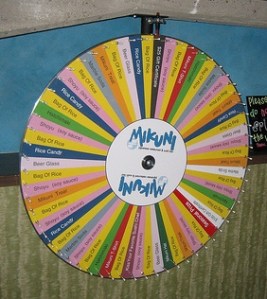
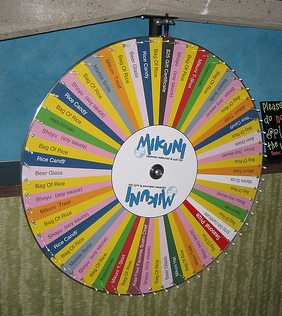
Helen Mosher gave us a heads-up that her colleague Maryann Lawlor was tweeting about swag from their conference. At one booth if you guessed the correct number of M&Ms in a jar, you could win a Snoopy lunchbox. In another you won prizes playing Wheel of Fortune. I’ve seen this at a restaurant in Sacramento – you spin the wheel on your birthday and have a chance at gift cards (best prize) or a bag of rice (worst but practical).

What kind of swag do you like taking home from trade shows? What do you actually use? On the contrary, what do you think is a big waste of money and resources?


If your company plans to send pre-show and post-show emails to conference or trade show attendees, don’t make the mistakes that most exhibitors do. Read these two posts to learn how to send emails that association executives will value:


Enter your email address to subscribe to this blog and receive notifications of new posts by email.


(This post includes an Amazon affiliate link. I receive a small commission if you click on the link and purchase the product.)