I’m late to the blogging scene, but now that I have some extra time on my hands (more about that later!), I wanted to add to the volunteering discussion that Peggy Hoffman started. However, instead of writing about my ideal volunteering jobs, I’m going to first write about my favorite volunteer experiences. I haven’t thought much about why these five experiences left such an impression on me, but by writing about it, I’m hoping to figure that out and use that insight in managing volunteers in the future.
Teaching English as a Second Language
When I lived in Arlington, Virginia I volunteered two nights a week for an adult education program that taught basic English to recent immigrants, most of whom were from El Salvador, but also included refugees from other countries. I spent much of my adult life up to then working as a restaurant manager so I felt particularly close to the Salvadoran community since many of my employees grew up there. Most of these students were holding down two minimum wage full-time jobs but still found time to show up several nights a week for English classes. My job was to assist the teacher with these large classes of 30-40 students of varying levels of literacy. It was perhaps the most rewarding work I have ever done.
My satisfaction came from the fact that I was truly helping these folks learn their new language as well as other life skills — we used everyday scenarios as teaching tools, such as opening and maintaining a checking account, going to the doctor or calling 911, filling out job applications, etc. I used my talents to help them succeed — I’m in tune with how people learn another language because I’ve done it myself many times. I knew enough Spanish to get them through some tough spots. So I was a great fit for the job. Plus I felt tremendously appreciated by the teachers I worked with — they fought over my services! And I saw the appreciation in the faces of the students. I was also stimulated by the work, not only emotionally, but intellectually since I had to figure out ways to help them learn (or even read!).
Distributing food at the Sacramento Food Bank
I’ve only done this one time, yesterday, so my memory is fresh. I give high marks to the food bank — they do a good job with their volunteers. Their response to my email was immediate. I attended a volunteer orientation last Friday run by an energetic and friendly staffer who took us on a tour of their facility explaining what they did and how we could help in each area. She went over policies and procedures so we knew what we were getting into. It was a thorough introduction to the food bank. I signed up on the spot with the manger of their food distribution services and showed up for my first shift yesterday morning. He gave me a nice welcome when I arrived and put me in the hands of two experienced volunteers who showed me the ropes. Another newbie and I shadowed them for a bit and then we were on our own, but everyone was helpful with our questions.
I appreciated the orientation, the friendly crew of helpful volunteers, the lunch they fed us, and the feeling I got from helping those in need. As I put together the grocery bags for the clients, I knew that the food selections I made for each of them had a big effect on how well they would eat that week — there was an immediate connection between my work and the effect it had on others. Another aspect I liked is that I was part of a team. Although we worked individually putting together bags for clients, we were all doing the same type of work, and then after distribution was over, we worked in groups bagging up bread and other food items. So there was a social element to it as well. Which leads me to my most social volunteering experience…
Pouring beer at countless beer festivals
Yes, countless. I was part of the homebrewing community in Washington DC so my friends and I were asked by the local breweries and brewpubs to help pour their beer at beer festivals or charity events. We were “beer geeks” so we could talk about the different beer styles — how they’re made, how they differ — and recommend beers for people to try. It really doesn’t get much better than talking about something you love and sharing it with people. The brewers appreciated us because if we weren’t there, they’d have to pay people to pour. Festival managers (usually our friends) knew they could trust us to not give away free beer. So I always felt appreciated and I had a blast. But the important thing to take away from my example is — when volunteering at a beer festival, always volunteer for the first shift of the day when people aren’t so drunk, then you can enjoy the festival yourself during the second shift!
Preparing and serving Thanksgiving dinner to the homeless
One year my friends got mad at me because I had the nerve to skip our regular Thanksgiving. Instead I went to DC’s largest shelter and helped prep Thanksgiving dinner for the homeless. I only planned to work during the morning and get to my own Thanksgiving later that day, but I ended up staying until the end, serving dinner in front of the Capitol and returning to clean up the kitchen at the end of the night. Why did that experience make such an impression? Lots of people come to the shelter on Thanksgiving to help, almost too many, and most of them don’t really know how to help effectively, but the staff is used to that and find jobs for everyone. Because I was a restaurant manager at the time and knew my way around a kitchen, I was put in charge of teams and that felt good — to be recognized for what I brought to them and given responsibility that I could handle. I felt appreciated. And look what happened, I never left. I stayed and kept helping.
Later that day as it got dark and cold in front of the lit-up Capitol (yes, the contrast was purposefully made by Mitch Snyder, the shelter’s founder, always on the look-out for good messaging opportunities), we served dinner to hundreds and hundreds of homeless folks. Everyone was incredibly polite and kind and I got many looks in the eyes with heartfelt thanks from some really down and out souls — it’s something you don’t forget. My friends forgave me immediately when I told them about my day.
Moderating a panel at NAHB’s Conference on Membership
Perhaps the most boring for many of you who do this type of thing all the time, but I really enjoyed moderating a panel discussion last fall at the National Association of Home Builder’s Conference on Membership. I put myself in the audience’s shoes and played Oprah, even walked around the room while doing it (so was I Phil Donahue?). The audience was made up of association CEOs and membership directors as well as volunteer leaders from home building associations from across the US, so it was easy for me to imagine what they would want the panel to talk about and to elicit questions from the audience. Why did this experience stand out for me? Recognition — who doesn’t like that? I felt honored by being asked. It was also intellectually challenging. I had to listen while thinking ahead to possible questions and conversation starters. Of course, I had a lot of questions written in the notes I prepared but I wanted to keep it fresh and go where the conversation led. And it was a one-off deal. There was prep involved but after the “performance” that was it.
Ok, I’ve rambled on enough. So my first blog post is written. That wasn’t so hard. Now I have to figure out what I’ve learned about these five experiences. Some things are obvious. Make it fun. Teams are good. Make it intellectually or emotionally rewarding — match work with skills. Recognize the skills your volunteers bring you and don’t be afraid to let them shine. Provide training — let them know what to expect. Show your appreciation. Have lots of one-time only volunteer opportunities. What did I miss?
Your turn, what have been some of your most rewarding volunteer experiences?

 There were 19 speakers. Each one gets five minutes and 20 slides. The slides automatically change every 15 seconds. They can speak about anything they want. They are chosen by the community. We voted for the speakers and topics we wanted to hear. Once we registered on the show’s web site, we received ten votes. We could give all ten votes to one speaker, or spread them out any way we chose. And if we changed our mind, we could take our vote back. The community chose 15 of the speakers and the organizers invited four speakers.
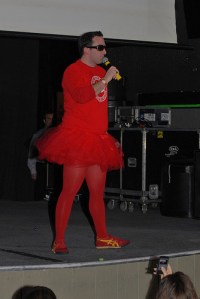
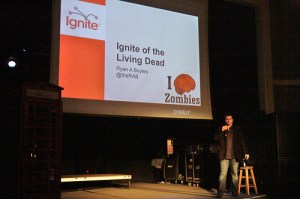 As you can see, it’s not a tech geek night, unless you call PowerPoint techy. It was fun and educational. It brought together about 500-600 people for a free night of entertainment.
 What does it take?
 Association Brain Food