The New Volunteer Manifesto Series – Part 2: Finding Volunteers

As part of my New Insights from a New CAE weekly column on SmartBlog Insights, I’m delving deeper into my New Volunteer Manifesto that I published here. In Part 2 published last Thursday, I looked at Finding Volunteers.

—————

The New Volunteer Manifesto: Finding Volunteers

Deirdre Reid, CAE is an association consultant, speaker and trainer focusing on member engagement and social media at Deirdre Reid LLC and Leadership Outfitters. Connect with her @DeirdreReid.

I recently published a call to action for associations, a New Volunteer Manifesto. Last week I explored the big picture. Now I’d like to propose some ideas for volunteer recruitment.

Survey all your members at least once a year to find out their professional development needs, leadership experience, interests, talents and number of hours they can volunteer per month (or quarter) so you can match them to the best volunteer opportunities for them. Keep this inventory readily available. Plan on getting updates because members’ needs and interests will change. Ideally, volunteers will call or visit members to get this information (a retention “touch”), but at least include the survey in welcome letters, renewal invoices and mailings. Follow up by phone with non-responders.

Committee involvement may be too demanding for personal schedules. Encourage ad hoc or episodic volunteering — an hour or so here and there. You need a variety of options that are still meaningful and do not require long-term commitments. Spend some time creating a list of these opportunities.

Publicize all volunteer opportunities on your website, particularly those requiring a minimal time commitment. Communicate in new ways: feature a few at meetings in an automated PowerPoint presentation; post on event table tents; announce ad-hoc opportunities via opt-in mobile texting; feature a few in each e-newsletter and on your home page, Facebook page, LinkedIn group or Twitter stream.

Keep in touch with volunteers who may step out of their roles temporarily due to other commitments. Let them know they are missed and will be welcomed back in any capacity.

Your leaders and staff must be able to answer the question, “what’s in it for me?” Don’t so much sell volunteering, as listen to what members need (that’s where the inventory comes in handy) and provide them solutions (volunteer opportunities) to help them grow, learn, meet others, etc.

Consider this:

“The primary difference between volunteers and non-volunteers, when measuring what they do with their time, is the amount of television they watch. People who do not volunteer watch hundreds of hours of additional TV a year compared to people who do volunteer. It’s not that people don’t have enough time to volunteer. People do not volunteer because nonprofits do not provide them with volunteer opportunities that interest them enough to pull them away from their television sets.” (Stanford Social Innovation Review, Winter 2009, The New Volunteer Workforce)

Are your volunteer opportunities meaningful and valuable enough to pull your members away from Jack Bauer?

Make it easy for those who are looking into involvement. Publicize committee meeting times, locations and agendas on your website. Publicly encourage members to attend a meeting if they’re interested. Take the mystery out of it.

The personal ask is the most effective way to recruit a volunteer, not a passive call for volunteers. When a member is asked to help, be ready with a few options, so they can choose the one that’s best for them.

Cultivate evangelical leaders and volunteers, those with social capital, who will personally ask others to get involved, and who can testify about the benefits of their volunteer service.

What do you think about these ideas? Have you tried any of them?

—————-

Yesterday my post on Keeping Volunteers was published. Check out SmartBlog Insights!

Bookmark and Share

The New Volunteer Manifesto Series – Part 1: The Big Picture

As part of my New Insights from a New CAE weekly column on SmartBlog Insights, I’m delving deeper into my New Volunteer Manifesto that I published here. In Part 1 published last week, I looked at The Big Picture.

—————

The New Volunteer Manifesto: The Big Picture

Deirdre Reid, CAE is an association consultant, speaker and trainer focusing on member engagement and social media at Deirdre Reid LLC and Leadership Outfitters. Connect with her @DeirdreReid.

I recently published a call to action for associations, a New Volunteer Manifesto. Now with your input, I’d like to dig a little deeper into that. First, here are my ideas on the big picture.

View all members as strategic assets whose talents can be shared with the association. Focus on developing ways for them to contribute their talents.

Invest in the infrastructure necessary to effectively recruit, develop, place, recognize and retain volunteer talent. You might have to admit that your current systems aren’t working as well as you’d like. What percentage of your membership is volunteering now? Your association is a community of talents — more work is accomplished with more hands on deck and more members invested in the goals of the association.

Slay your sacred cows! Can we get that on a t-shirt? Get rid of committees, programs or pet projects that aren’t moving your association toward achieving its goals. Establish sunset reviews every two or three years.

Beware the leadership bubble! Put that on a t-shirt too. Leadership can develop an insular perspective and won’t always see what members really need and value. Their view could be colored by their association service, their age or career stage. Make sure you have multiple perspectives participating in decisions that affect your membership and the future of your association.

Find new jobs for your deadwood leaders. If they’re not open to innovation and new perspectives, ease them out. Their fear of regret (for not taking a risk) should outweigh their fear of failure. If anyone says, “that’s the way we’ve always done it,” be very scared. Or, “if it’s not broken, why fix it.” Is mediocrity good enough for them? Will they even know if something is broken? If a leader isn’t concerned with the future needs of the association, or isn’t interested in growing as a leader, bid them adieu. This isn’t about a title; this is about leadership and vision.

Align committee work with association goals. Are your committees charged with goals to achieve? Are they accountable? Do they have the autonomy to choose how best to achieve those goals, or are their strategies and tactics imposed from above? Do they report back on progress made? Your committees must do meaningful work in meaningful ways to avoid stagnation.

Make all your leaders accessible to each other. Is there regular communication amongst your leadership – board members, committee chairs, and other formal and informal group leaders? Are they really a team, all of them? Are they in a position to help each other? Learn together?

Choose the right chairs. Make sure the members who are leading your association, not only the board, but also committee chairs, have the right motivations to be there. They’re not in it for the ego or title. They want to help the association achieve its goals and bring along others to help them do it. They’re enthusiastic about sharing the benefits of leading and volunteering. They have social capital — they can recruit others to get involved. They’re forward-thinking and receptive to new ideas and perspectives.

Appoint a Community officer as part of your leadership team, perhaps your incoming president, whose main responsibility is to develop and retain a huge corps of volunteers. Just as you need to focus on your budget and reserve to ensure the financial health of your association, so too do you need to focus on your volunteer corps and reserves.

What do you think about these ideas? Have you tried any of them?

—————

Thursday in Part 2 I’ll discuss Finding Volunteers. Stay tuned to SmartBlog Insights!

Bookmark and Share

Xtreme Communities

This post is from my weekly column, New Insights from a New CAE, on SmartBlog Insights. I really like this post and I hope you do too.

————

My knowledge of evangelical churches is limited to driving by mega-churches with gigantic parking lots, the kind that cause traffic jams on Sundays. But I’m captivated by their approach to community.

Xtreme Ministries, a church in Nashville that’s also a mixed martial arts academy “where feet, fist and faith collide,” is one of a growing number of evangelical churches where ultimate fighting attracts and retains a hard-to-reach demographic – 18-34 year old men. We know this lesson – provide activities that appeal to young adults if you want them to pay attention to you.

Brandon Beals, lead pastor at Canyon Creek Church, created the church he’d always wanted as a spiritual home, a place where he’d want to hang out — one that recently had 100 men show up to watch ultimate fighting on big screen TVs. Half of them weren’t members but came because they heard about the party. Maybe they’ll also come to his lectures that draw parallels between ultimate fighting and Christ’s life, “the ultimate fighter.”

Beals says this is “not a gimmick to get 20-somethings into our church. Canyon Creek doesn’t need a gimmick to encourage them to come.” I was skeptical about that until I read his description of the church’s Culture:

  • Expect the unexpected
  • Irrelevance is irreverence
  • Love people when they lease expect it and least deserve it
  • Playing it safe is risky
  • Everyone is invaluable and irreplaceable
  • Everything is an experiment
  • The church ought to be the most creative place on the planet
  • Maturity does not equal conformity
  • Go the extra mile

Make no mistake, this is a seriously evangelical church, but they’re doing it on their own terms, in ways that are authentic to its members. In addition to services, they have cook-offs, movie nights, book clubs, yoga, sports, a Facebook fan page and podcasts, all aligned with their Core Beliefs — be Real, Relevant, Relational, Reproductive and Rousing. They’re creating an innovative spiritual community.

Are we providing Real, Relevant and Rousing professional communities for our members? I agree, being relevant isn’t enough, but here’s how their definition of Relevant:

  • Understand the emerging culture
  • Utilize creative innovative means to present truth
  • Encourage diversity
  • Willingness to change

That aims higher than our usual definition. Why do we settle? Think about it: how many communities can people have the attention, time and energy for? Maybe several, but if your association is not meeting their need for a Relevant and Rousing community, it’s not going to remain high up on their relevance scale, or their attention, time and energy scales.

Their church evolves so it remains Relevant to the community. Do our traditions, activities and ways of operating really work for everyone, or just those who actively participate? Do they prevent us from evolving? What happens if someone proposes something new? Do they dare to even do that?

Churches like Canyon Creek are successful for many reasons. Take a look at churches in your neck of the woods through an organizational development lens. You may find that they are fulfilling their primary organizational mission while remaining flexible and innovative in how they serve their members. Their parking lots are full. Are yours?

Bookmark and Share

New Insights from a New CAE

My new weekly column New Insights from a New CAE debuted on SmartBlog Insights this week. Here is the first post.

—————

I’ll be sharing New Insights from a New CAE with you each week here on SmartBlog Insights. Studying for the Certified Association Executive (CAE) exam gave me insight into corners of the association office that I merely peeked into before. It reignited my commitment to and fascination for this industry. Julia Child once said that she loved her job because she learns something new each day. I know what she means.

When I was working at associations, I struggled to find the time to think about the larger issues that we, and all associations, faced. My mind was overloaded by my interminable “get it done” lists – a typical symptom of those who, as the old cliché goes, wear many hats and juggle many balls. I had hundreds of bookmarked posts, piles of magazines, and unread notes from educational sessions. My mind only found the space to wrestle with these challenges while driving, chopping vegetables or before falling asleep. How many times have you scribbled great ideas down on a notepad in the dark?

Imagine the joy I took in simply reading and reflecting during my CAE studies. I had the opportunity to delve deeply into areas that I could only dip into before, and it brought me a much deeper and future-oriented perspective.

However, this new perspective is somewhat tempered by my conditioning – ten years working for trade associations. I know that “what could be” is often sacrificed for the challenges staring us in the face; that what we can realistically expect to get done is based on the limited staff, volunteer and financial resources on hand; and that change, no matter how beneficial, can be challenging. However, I fear that staying stuck because of these challenges prevents us from seeing where we could go, what we could be.

Many of our members are innovative entrepreneurs who have succeeded in starting a business and making their dreams a reality. How can associations capture some of that same spirit and create new 21st century ways of associating? Engaging our members, serving them and bonding them to us?

I believe there are lessons to learn (and inspiration to gain) from many sources, including each other. I’ve written about my CAE journey of learning. It is never-ending. I invite you to suggest topics for my weekly SmartBlog post so that we can get inspired and continue learning together.

Worker Bees: Working with Committees

I recently did a presentation on working with committees and sections at the American Bar Association’s Bar Leadership Institute (BLI) in Chicago. BLI is held annually for incoming bar association presidents and their executive directors. I was hired to bring in an outsider and more forward-thinking perspective — that’s always fun! Some of their bar associations have problems with stagnant committees and renegade sections so I addressed those issues in addition to recruiting and working with chairs and volunteers.

I posted my presentation and some notes in PDF format to Slideshare. I was also on a social media panel but we didn’t have slides for that one, just lots of questions. It was standing room only — definitely proof of a desire to figure out how to take advantage of all that social media offers to an association.

Ignite Your Conference!

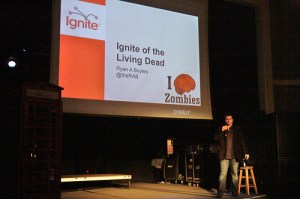
Last night I attended Ignite Raleigh. It’s been described as a technology variety show but that description doesn’t do it justice. Here’s how it works.

Lisa Creech Bledsoe aka twitter/glowbirdThere were 19 speakers. Each one gets five minutes and 20 slides. The slides automatically change every 15 seconds. They can speak about anything they want. They are chosen by the community. We voted for the speakers and topics we wanted to hear. Once we registered on the show’s web site, we received ten votes. We could give all ten votes to one speaker, or spread them out any way we chose. And if we changed our mind, we could take our vote back. The community chose 15 of the speakers and the organizers invited four speakers.

It’s a fast-moving show hosted by an emcee who kept it lively. At the end of five minutes, you are rickrolled off the stage. Some of last night’s topics:

  • A Day in the Life of a Meteorologist
  • NerdGirls Unite! Fact: Women Don’t Have to Be Lame
  • How to Save $100 with a DIY Home Energy Audit
  • 20 Little Know Facts About Sex & Pleasure
  • What Happens to Your Digital Identity After You Die
  • 13 Reasons Women Should Take Up Boxing
  • Everyone Needs a Dumb Guy
  • Mayberry Modernism: Why the Triangle is America’s Hotspot for Way Cool Houses
  • Ignite Night of the Living Dead
  • Why My Cat Can Get a Job Before You

Ryan Boyle aka twitter/therabAs you can see, it’s not a tech geek night, unless you call PowerPoint techy. It was fun and educational. It brought together about 500-600 people for a free night of entertainment.

Why would an association want to do this at a conference?

  • It’s a low cost (or free) night of entertainment for attendees where they can hang out and have fun with others.
  • We get to see another side of fellow members.
  • We also get to see members in the spotlight that might not normally get that exposure, a new set of faces.
  • It will be talked about. Believe me, this type of event gets lots of buzz – tweets, Facebook posts and lots of blog posts, lots.
  • It’s a great way to experiment with crowd-sourcing.
  • You can offer something to those members (perhaps younger, perhaps easily bored) who aren’t interested in your usual evening fare.

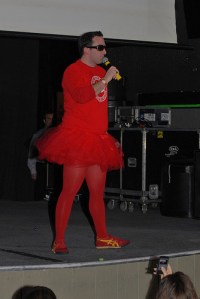
emcee Zach Ward aka twitter/zachwardWhat does it take?

  • Organizers – Ignite Raleigh was organized by the three man team of OurHashtag with the help of a volunteer coordinator.
  • A large room with a stage, screen and two mics (one for the emcee, one handheld mic for the speaker). The venue last night had some bridge chair seating in the front and in the balcony, but most of it was standing room only.
  • Voting tool – Ignite uses Uservoice on their web site.
  • Registration tool like Eventbrite – Ignite Raleigh was free and they closed registration when they reached the room’s capacity plus an additional no-show allowance.
  • Technical help to run the automated Powerpoint, sound, lights, video camera, livestream (optional) and photography.
  • Volunteers to check folks in, do crowd control and assistance, act as runners and shuffle speakers on and off stage.
  • An entertaining emcee – red tutu not required.
  • Sponsors to cover expenses – Ignite Raleigh ran short videos at the beginning of the night and at intermission and gave them lots of stage/on site love but not the microphone.
  • Brave speakers.
  • Cash bar for the audience.
  • Marketing in conference materials and through social media.

Instead of going to an association awards dinner, I would much rather attend an Ignite-like evening, and I’m a Boomer/Gen Xer (Generation Jones), imagine what your young members would prefer. This is a great alternative to your regular evening programming for those who frankly aren’t interested in what you’re offering, or can’t afford it.

UPDATE: After posting this I learned from Shelly Alcorn that the California Society of Association Executives will be doing an Ignite night at their annual conference. Can’t wait to hear how it goes!

What It Takes to Plan and Host a Conference in Only 46 Hours

In how many hours? Yes, 46 hours, according to my calculations. Sounds impossible? It can be done. As a matter of fact, it happened this week after the American Society of Association Executives (ASAE) had to cancel its annual Technology Conference.

The conference was to start on Wednesday with exhibitor move-in and pre-conference workshops, but DC was still under nearly two feet of snow from the weekend’s storm and was due to get one foot more in blizzard conditions on Wednesday. Airlines were already canceling flights. Some attendees and exhibitors got to town on Tuesday before everything shut down but many were still stuck at home. Even many of those based in DC were still snowbound due to impassable roads and no Metro or train service above ground.

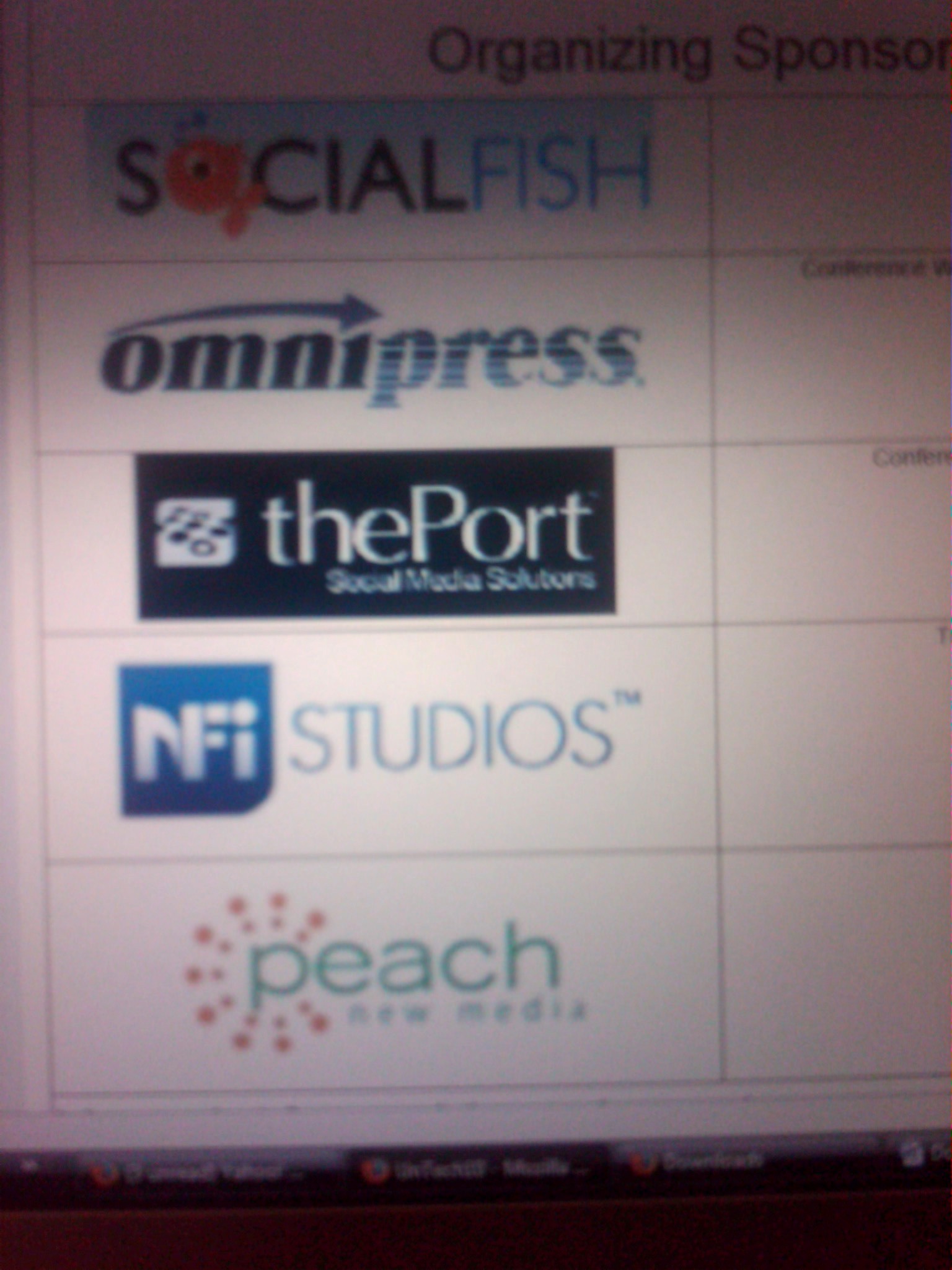
On Tuesday morning ASAE announced via Twitter that it would make a decision by 3:00 p.m. as to whether the conference would be canceled. That’s when the member community started working on Plan B. Later ASAE announced their decision to cancel, the right thing to do considering the conditions. Immediately after, Maddie Grant and Lindy Dreyer of Socialfish blogged about UnTech10, Plan B, an unconference that a team of members had quickly started organizing.

On Thursday, 75 attended UnTech10 in person and 425 attended virtually via a live stream (live webcast) of the programming. I didn’t have the time or budget to go to ASAE’s Technology Conference, but now I was able to “attend” UnTech10 for several hours on Thursday. It was an intellectually stimulating afternoon, time well spent. On Friday, although there wasn’t an on-site component, a full day of webinars was scheduled for the virtual audience.

What do you need to pull off something like this? Here’s what I learned from Maddie and Lindy’s post about organizing it.

You need word of mouth (or mouse) marketing. Most of the marketing for UnTech10 was done via Twitter. A hashtag for the conference was created (#UnTech10) so members could follow that stream of tweets to keep updated. Keep your tweets short enough so that others can retweet them. Vendors also notified clients via email.

Create a Facebook fan page. Although UnTech10 didn’t do this, I saw several references to UnTech10 in my Facebook News Feed as friends shared the original Socialfish blog post.

Create a buzz-worthy email and ask your members to forward it to those they know in the industry or profession. Give clear instructions on how to register and compelling reasons on why they will want to participate. Don’t scare them off by using only technical lingo. This is user-friendly technology, like watching TV!

Contact affiliated or friendly organizations for help in spreading the word. Provide copy and links that they can use to share the news. If you create a sense of buzz and excitement about something, it will go viral if you make it easy for others to help you.

Create a central hub for handouts, schedule, instructions on how to participate and an archive of webcast segments. Content experts were asked to submit program ideas to a wiki. The organizers created a full day of on-site programming (that was live streamed) for Thursday and a full day of webinars for Friday.

Most importantly, you need a community – good relationships with vendors who can help you pull it all together – vendors that will contribute staff to work with you and free services and/or funding for other expenses. This organizing team will take charge and make it happen. According to Maddie, each company on the UnTech10 team had an area to oversee:

You can do this. You can do this if your event is threatened by weather or other unforeseen circumstances. You can certainly do this if you have more time than the UnTech10 team had. They were able to pull it off because they had relationships based on existing trust. Trust that everyone would work together and do their best for the right reasons. The team stepped up and made something excellent out of an unfortunate situation and provided a meaningful experience for our community — an experience that many of us would not have had otherwise.  Because of the generosity and hard work of my fellow members, now I had a chance to grab several hours of education and online networking with other members. This is what a real community does. Does your association have that kind of community?

I Wasn’t Expecting That Reaction

I had a moment of bliss watching The Who perform last night at the Super Bowl halftime. I have loved The Who since junior high and remained an obsessive fan through high school, college and some years beyond – the type that had all their albums plus bootlegs (yes, this dates me), camped out for tickets and knew all kinds of arcane facts about them.

Last night I was just a normal fan grinning ear to ear (and got a bit misty-eyed, I admit) as they played. I didn’t expect a dynamo performance, after all Roger and Pete are well into their 60s, the only survivors of the original four, and can’t quite sing and move like they used to. But, in my opinion, they can still rock — Pete doing his windmill chords and Roger singing with passion. After the bliss and a bit of friendly sparring on Twitter about old rockers, I saw a retweet of this tweet from the National Association of the Deaf:

The phrase in question is from Pinball Wizard, a song from The Who’s 1969 rock opera Tommy. Tommy became blind, deaf and mute shortly after World War 2 and most of the opera took place in the twenty or so years that followed. We will all have different opinions on whether the phrase is offensive or not, whether the context matters or not and, based on that, whether the NAD overreacted or not. I want to concentrate on how the association reacted and what we can learn from that.

Their tweet got a response – about 37 people so far have retweeted or responded to it, most of them with disparaging remarks. NAD is not a complete social media rookie. They created their Twitter account last June and have 1064 followers. They also have an active Facebook page and a blog (no recent updates). Their web site has recent updates about their work with the NFL and CBS “to make advertisers who purchase Super Bowl commercials aware of the importance of captioning their content.” They do important work and are good at it.

This morning I found myself thinking again about their Twitter reaction and some issues it brings up. First, unfortunately, there’s the dreaded control issue. Did the staffer who tweeted have to seek approval before saying “the NAD will take action?” Were they authorized to say that? And if so, how did they manage to get approval so quickly? Or were they just reacting? Does NAD have guidelines for social media use? Do NAD members agree with this reaction? Only three tweets out of the 36 appear to support the NAD position. The members were not there defending them. Could this happen to your association?

And what’s the best response now? They could ignore the whole situation. 36 tweets is by no means a public outcry, although there is the possibility that someone with a much larger following than me could be writing about it right now and bring more attention to it. But more likely it’s only the prickly Who fans who care.

NAD could reply by explaining their reaction and giving us context as to why that reaction makes sense for their community. Perhaps discussing the history of their advocacy, the struggles and victories, and the need to pay attention to how we describe others. Turn it into a lesson for us. That’s hard to do in 140 characters but they could link their replies to a blog post. But 20 hours later, that hasn’t happened.

Let’s assume for a moment and for argument’s sake that this tweet was a mistake. What can we learn from this? We all make mistakes. Twitter is a fairly new evolving communication platform often blending our personal and professional lives – things can get sticky. I reacted as a Who fan, not as an association professional. Perhaps I should have ignored the RT and given them a pass, considering they’re an association and have enough battles to fight. But I couldn’t help but react – it seemed so ridiculous and wasteful to pick a battle with a 41 year old lyric. I can’t stand how litigious our society has become. I understand that sometimes legal action is appropriate, but this seemed over the top to me.

Mistakes will happen. What’s critical is how we follow up and whether we learn from our mistakes. Twitter is a public platform that’s indexed by Google, so there are more eyeballs than you might imagine who can see how you handle a situation. A mistake is an opportunity to do many different things, depending on the situation — make apologies and amends, explain a complicated or controversial issue, make friends or not. How we handle public mistakes will influence the perception that our members and the public have of us. Mistakes also help us learn how to improve our social media practices so we don’t make the same ones again.

Part of what draws us to social networking is the opportunity to learn from each other. Here’s an opportunity to imagine what you would do in their place – what if the tweet got more publicity, how you would handle the situation? How would you have prevented it? Has your association ever made what others thought was a public gaffe, and if so, how did you handle it? What did you learn?

UPDATE February 26, 2009: Thanks to Jessica Sidman at Association & Non-Profit Bisnow newsletter for doing some follow-up reporting for me. She told me about a February 25 blog post (and forthcoming video response) by NAD’s president where she explains their reasons for the Twitter reaction. They definitely did their research on the lyrics and Tommy story. The post is a good explanation with a call to action for their members to remain vigilant and educate others about how the appropriate use of the word “deaf.”

Kudos to them for the well reasoned and written response. How could they have done better? If they had posted their response earlier, it might have captured some Super Bowl momentum, and perhaps some press too. But associations are creaky institutions. We have procedures to follow, reviews and approvals, and maybe even a vote before we can take action. Our governance and departmental processes often prevent us from moving nimbly enough for the social media space.