Reading and Writing

Have you missed my Reads of the Week posts? I’m sorry I haven’t been sharing good reads with you here, but I’m still sharing them on my Twitter account. I take reading and sharing quite seriously. 

It’s been a busy spring of conferences, a hiking vacation in southern Utah (see below), weekends away and lots of work for clients. Clients come first, otherwise there wouldn’t be any conferences, vacations and weekends away! 

Luckily, I have another platform to share my thoughts and ideas about association management — my weekly post on the Avectra blog. Tomorrow, my post is about the advice given to a national association by its members. In recent weeks, I’ve written about leading from the cubicle, spending a day in the life of members and new membership models.

I’m always looking for ideas, practices and programs to share with the association community, so if your association is doing something innovative, please let me know.

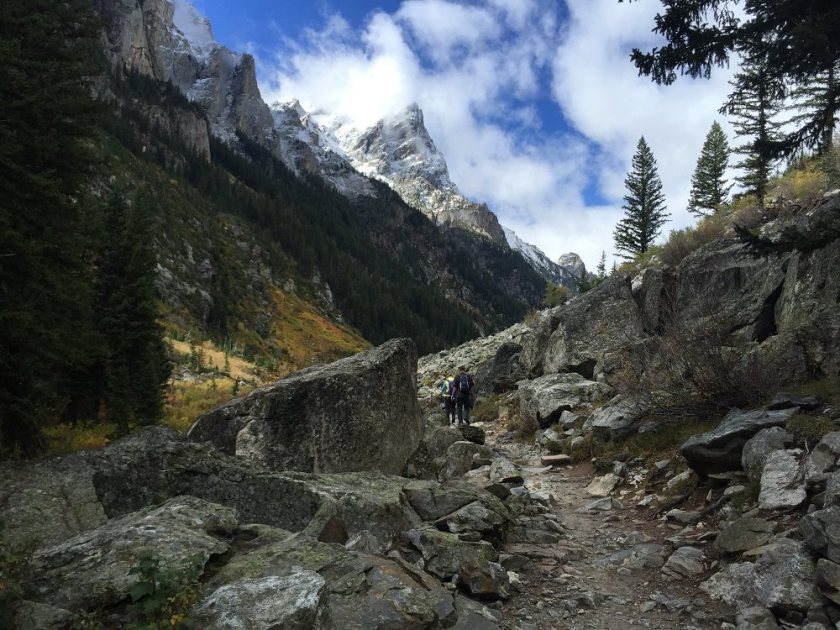
Proudest personal accomplishment: facing my fears and climbing to the top of Angels Landing, Zion National Park. This photo is taken from 2 miles up the trail at Scout Lookout. The last half mile is up that crazy fin to the narrow summit. I DID IT!!!!
Proudest personal accomplishment: facing my fears and hiking to the top of Angels Landing, Zion National Park. This photo is taken from 2 miles up the trail at Scout Lookout. The last half mile is up that crazy fin to the narrow summit.
I DID IT!!!!

Hack Your Association

Have you ever seen one of these?

association maker culture
UCF’s 3D printer at digitalNow

That’s a 3D printer from the University of Central Florida’s Institute for Simulation and Training METIL Lab. David Metcalf and two of his students brought it to the digitalNow conference for The Maker Society, a session they presented with Jenny Levine, Strategy Guide at the American Library Association. 

Jenny made it clear up front: “Your association does not need a 3D printer.” Instead she focused on the maker culture and what it means for associations.

These articles will give you a better understanding of the maker culture:

Who’s a maker? Dale Dougherty, founder of MAKE, defines a maker as:

“Someone who is a builder, a creator, a producer, a developer, someone who has an active sense of taking an idea and developing it into something that’s real and tangible and can be shared with other people.”

Sounds like the ideal association leader to me.

The Maker Generation

A generation of makers is coming of age — our future members. How do we become organizations they want (and need) in their lives?

Librarians, as usual, are ahead of the game. At work, they’re creating maker spaces for kids and adults. At their association, the American Library Association (ALA), they’re experimenting with new approaches to membership issues. Like many associations, ALA has seen a decline in volunteerism. Fewer members are willing to commit to time-intensive volunteer roles. So what can an association do? Jenny  appeals to the maker in her members.

  • Listen to member conversations. What are they talking about? What inspires their passion? Jenny monitors an unofficial group of 3000 members and non-members on Facebook – the ALA Think Tank. She looks for short-term project ideas that she can help facilitate.
  • Create new pathways to bring members into association involvement. In addition to the traditional, time-intensive style of volunteer service, offer project-based entry points that require less of a time commitment.
  • Nurture the maker ethos – “let’s just do it” – by providing support or, at least, encouragement to member-organized projects.

One of the UCF students mentioned how fun it is to get a maker community going. The community was already there, UCF only needed to give it resources and get out of the way. You have communities of members who are passionate about different issues or causes. Find them and listen to them. What types of projects would give them a sense of satisfaction while also staying aligned with the association’s mission?

Maker governance

When Jenny looks for projects, one of her criteria is purpose. David Metcalf looks for passion about a social mission. The motivation behind these projects is a yearning to create or accomplish something. That’s such a powerful desire – the drive to create – yet how often do associations satisfy it?

After the session, I wondered: What will happen to the traditional association governance model? Is the next generation of members willing to put in time serving on committee after committee in hopes of getting a board position and then, maybe one day, being nominated for an officer position? Is that a desirable path? Is that how they want to serve? Is that how they envision an association experience?

Will this generation of makers be willing to deal with the slow-moving engines of association governance? Does “let’s just do it” work in the association world? Can we find ways to let people get together and make “things” that help their fellow members, attendees, profession/industry or community? 

I’m excited about this emerging culture of makers and here’s why. Bob Johansen, author of Leaders Make the Future: Ten New Leadership Skills for an Uncertain World, says the best leaders are makers:

“All humans have at least a touch of what I call the maker instinct, but most leaders have a serious dose since they must make and remake the organizations they lead. The best leaders have always been tinkerers who imagine alternative structures and love to play around with them to see what new things they can create.”

Why wait for the young ones to start hacking our associations. Let’s figure out how to just do it ourselves.

association maker motto
Photo by NoSoma (Flickr CC)

Conference Creativity Rooms

Although I didn’t participate in today’s #assnchat about ASAE’s Great Ideas Conference, it still inspired a blog post. Thank you, KiKi! Here’s why.

conference creativity rooms

I must confess I never went into the creativity rooms at Great Ideas. I peeked into one, but it looked like a dolled-up regular meeting room to me. Maybe I missed something. Maybe I missed it completely. I thought I saw toys on the tables. Or did my eyes deceive me? It’s a shame I didn’t go in and explore, but the timing was never right.

And table toys don’t do much for me. I swear I’m not that serious a person. I’ve attended sessions with group activities centered around toys or other building-block-type things. It’s forced fun for a while. People relax a bit and some get really competitive: “Ours will be bigger!” Perhaps playing with toys shifts our mindset from serious office mode to relaxed engaged conference mode. And, yes, we’re using our creativity, but it seems so forced. And passé, isn’t it? Ok, call me a kill-joy. Then, after a rousing round of construction, the hubbub dies down and we sit passively for the next 30 to 40 minutes listening to the speaker and sneaking glances at the silly-looking fort on our table.

The association professionals in today’s Twitter chat had plenty of great ideas (heh heh) for conference creativity rooms and I even have a few of my own.

Exercise: @AssnMetrics would include “some piece of exercise equipment to put my body in a different state from just sitting.” That reminded me of the Snap Learning Spot sponsored by the Canadian Tourism Commission at Great Ideas where my friend Rob Barnes rode an exercise bike for 35 miles while listening to a micro-learning session. His miles on the bike also raised money for charity. I can imagine a creativity room with a bunch of exercise bikes (or treadmills or ellipticals) for people who want to chat while firing up their mind and body. Maybe some air hockey too. If you rather get outside, the room could be a meeting place for people who want to take scheduled or random walks or hikes.

F&B: The Canadians also served poutine at one point during the conference. I’m sorry I missed it! But, that leads me to my second creativity room feature – food and beverages. @SarahJanetHill and @strattonpub had the same idea. Definitely provide coffee, tea, water and other healthy beverages. Our brains need fuel. Have sign-ups for sommelier- or Cicerone-led wine and beer tastings at the end of the day. The food for the room could be made by people attending mini-cooking classes.

Mini-classes: Why stop at cooking classes? People can sign up in advance to teach people how to knit, play Texas Hold ‘Em or the acoustic guitar, or whatever. 

Arts and crafts: @SarahJanetHill said she likes “playdoh or pipecleaners or something to keep my hands busy. Helps keep my brain engaged.” @ASegar added, “craft paper, scissors, glue.” Who doesn’t like arts and crafts? Let’s make lunch centerpieces, art projects, lanyards or badge decorations – it’s like camp!

Puppy room: @k8doyle suggested this brilliant idea. But where do the puppies (or kitties) come from? Why the Humane Society or SPCA, of course! They can talk to folks about fostering pets, pet care, and other topics.

Music: @ToeKneeRay wants music and I agree. Even at a low (and adjustable) volume, it will energize people. Live music throughout the venue would be even better, if you can afford it. 

Furniture: @strattonpub requests “comfortable seating for solo and group work, lots of natural lighting, warm colors/décor.” I’d add all kinds of plants too – ferns, cacti, succulents, leafy plants, etc. @craigsorrell would like “a room of rocking chairs so you can sit and chat with attendees.” I envision a big room with some private spaces for those who need a bit of solitude. A room with a view would be ideal. Or a few rooms scattered throughout the venue, each with their own character.

Shazam: Wouldn’t it be cool to go somewhere and let your creativity and intellect go crazy in conversation with other attendees? Maybe speakers would pop by and ask questions that encourage wild thinking and wondering. Or whoever is staffing the room would come armed with provocative questions and topics, and not just professional ones.

Tools: @ASegar would stock “flipcharts, postable walls, sticky notes, pens” and @strattonpub would include a “whiteboard or chalkboard.” Make it a good place to let the mind wander and work out issues. Provide magazines and iPads too – tether them if you wish. Who knows, maybe you can get a group visionboard activity going.

Introvert-friendly: @bussolati said “My ideal creativity room would be just me… Introverts unite!” She wasn’t alone in that sentiment. We can create creativity rooms that include quiet space where we can recharge alone.

@ThadLurie shared an article by Susan Cain, The Rise of the New Groupthink. “We need to move beyond the New Groupthink and embrace a more nuanced approach to creativity and learning,” said Cain. “Our offices should encourage casual, cafe-style interactions, but allow people to disappear into personalized, private spaces when they want to be alone.” Replace offices with conferences.

I know we’re at conferences primarily to meet and deepen relationships, oh, yeah, and to get an education too, but I wouldn’t mind a bit more downtime or white space, even if it means extending the conference. I hate having to skip a session just so I can go for a walk while it’s light out.

What do you think? What’s in your ideal creativity room? And how do you recharge when you’re in the midst of a conference?

Lifelong Learning is a Requirement, not an Option

“It’s a tragic fact that most of us know only how to be taught; we haven’t learned how to learn.”

Jeff Cobb, self-described “lifelong learning fanatic” and founder of Tagoras and Mission to Learn, introduced me to that quote from Malcolm Knowles, the adult education expert of the late 20th century. In a recent webinar about his book, 10 Ways to Be a Better Learner, Jeff talked about why it’s so critical, especially now, to be a lifelong learner:

  • Because of the speed and complexity of our world, we are at risk of information overload. We have to develop techniques to navigate this flow, absorb it, and develop knowledge from it.
  • Learning doesn’t stop at graduation. In “the other 50 years” we need to keep developing. Learning is a process, not an outcome.
  • We live in a learning economy, or as Jeff calls it, “a figure-it-out-on-a-daily-basis economy.” To thrive, we must keep acquiring new knowledge and skills.

According to Jeff, lifelong learning is no longer optional, it’s required. When he talks about learning, he means self-directed learning as well as formal learning (courses and classes). He defines learning as “a lifelong process of transforming information and experience into knowledge, skills, behaviors and attitudes.”

In 10 Ways to Be a Better Learner, which you can also download as an eBook for a very inexpensive price, Jeff advises starting with one or two of the Ways. Focus first on them and make them part of your life before trying any others. At his website, he provides resources to help you explore each one. Here are a few to consider.

Read the rest of Lifelong Learning is a Requirement, not an Option at the Avectra blog.

Think Responsive for Your Association Website

Have you ever pulled up a website on your phone and been frustrated by the tiny text and tabs? Unless I’m desperate to do something there, I usually give up. In either case, I’m frustrated by the awful user experience. Don’t they care about their customers?

When’s the last time you looked at your association website on a mobile phone? Hopefully, it was a good experience because, according to technology research firm Gartner, by 2013 more people will access websites with mobile phones than with desktop computers.

You’ll see evidence of this trend if you look at your website’s analytics and note the different browsers, operating systems, and screen resolutions used by visitors. Bear in mind, if your website isn’t mobile-friendly, the numbers may reflect the cold reality that your mobile users have tried and given up on your site.

Members increasingly want your association in their pocket. When they’re not at a desktop computer, they want to find and read what they need, look up other members’ contact info, register for events, attend webinars, and participate in online community discussions.

If your website is difficult to navigate on mobile phones, if images or pages don’t load, or if users have to scroll or zoom excessively to view content, you have a big problem. It looks like you don’t care.

Read more about responsive design websites at the Avectra blog.

“NO vendors, please.”

Every day in my association’s online community, people reach out to fellow members to ask questions or request guidance. Today I saw someone ask for examples of associations that have had proven success with social media. At the bottom of her request for help, she added three words – “NO vendors, please.”

I get why people say that. Too many clueless vendors use discussion forums for their own spammy self-interest. Their boorish behavior provokes others to put fences around their discussions so vendors can’t contribute.

Some association executives want to hear advice only from those who have been in their shoes, either as a CEO or director of membership, education, or another department. But many vendors have been in these same positions – they know what they’re talking about.

Even if vendors don’t have association management experience, they can provide you with the examples or guidance you seek. I thought of a handful of social media consultants who could have given this person exactly the data she needed for her board. Vendors are happy to share their clients’ (and others’) success stories and answer your questions either publicly or privately.

I’ve learned a beautiful thing about many of the vendors in my association community – they’re willing to share their knowledge when someone asks and they won’t ask for anything in return. They won’t hound you with phone calls or add you to a mailing list without your permission. They simply want to help.

Why? They’re smart. They know providing knowledge to others gets their name out there in the community. That’s why they write articles, blog posts, and white papers, and speak at conferences, workshops, and webinars.

Many of them are also blessed with a good heart. They get a kick out of helping others. Why hoard knowledge when you can share it? They’re driven by relationships and are sincerely passionate about their professional community. It’s why you always see them smiling and laughing at conferences despite the grueling hours spent traveling, exhibiting, and speaking while getting up too early and staying up too late.

I know these vendors’ secrets because I work closely with several of them and I’m friends with many others. I see what makes them tick, and it’s not just the prospect of new business. It’s the prospect of helping someone.

So the next time you’re tempted to write “NO vendors, please” in your request for help, please remember, there may be a vendor out there who has exactly the information you need. As a matter of fact, they may be the only one paying attention who has what you need, and they’re willing to provide it without any ulterior motive, but unfortunately you just blew him or her off.  

Will Associations Earn the Girl Scout Badge for Relevancy?

Eight years ago, the Girl Scouts of the USA decided it was time to transform the organization. “We knew we had to…revitalize the organization to ensure we remain compelling, contemporary and relevant to today’s girls.”

“Girl Scouts was founded 100 years ago. We need to update the organization and our model, or else we’re going to lose people,” says Anna Maria Chávez, CEO of Girl Scouts of the USA.

Sound familiar?

Think big. Act boldly. Transform yourself.

It doesn’t surprise me the Girl Scouts plan to transform themselves. After all, the Girl Scouts have been a transformational experience for many of their alumnae, including me.  According to Girl Scouting Works: The Alumnae Impact Study, Girl Scout alumnae exhibit more positive life outcomes than do non-Girl Scout alumnae, including self-perceptions, volunteerism, community work, civic engagement, education, income and socioeconomic status. Not bad.

Are your members’ lives changed because of their membership? Do they get experiences they wouldn’t have elsewhere? Relationships they couldn’t develop elsewhere? Education they can’t find elsewhere? Does your association provide a transformational experience for your members? Imagine if you did, you wouldn’t have any worries about recruitment, retention or relevance.

Read more about why the Girl Scouts have lessons for associations at the Avectra blog.

My old Girl Scout sash

Word of the Day: Truthiness

Is that even a real word? Yes, it is, says Dictionary.com:

truth·i·ness [troo-thee-nis] (noun):

“the quality of seeming to be true according to one’s intuition, opinion, or perception without regard to logic, factual evidence, or the like: the growing trend of truthiness as opposed to truth.”

And Wikipedia says:

“Truthiness is a quality characterizing a “truth” that a person claims to know intuitively “from the gut” or because it “feels right” without regard to evidence, logic, intellectual examination, or facts.”

I came upon “truthiness” this morning in a blog post by Maria Popova at the Brain Pickings blog:

“What emerges is a kind of ‘unified theory of storytelling,’ revealing not only our gift for manufacturing truthiness in the narratives we tell ourselves and others, but also the remarkable capacity of stories — the right kinds of them — to change our shared experience for the better.”

I would hope “truthiness” meant something like having an unquestionable and palpable essence of truth, something that is and feels reliably authentic and true. But no, as long as it feels right, it’s true enough for truthiness. Before looking it up myself, my hopeful definition of “truthiness” felt right to me. It had a truthiness of truth. 

Somehow I missed the entire emergence and proliferation of “truthiness.”  Stephen Colbert has been talking about truthiness since 2005. After reading the real definition of truthiness, I immediately thought of politicians, political analysts and strategists on both sides of the aisle. They all practice truthiness, except their fans and followers don’t know or admit it because they’re blinded by ideology or choose not to question or hear it. What a mess.

But behold! The smartie pants, bless their hearts, and I mean that in a Northern, not Southern sense, are on the case.  Harvard’s Berkman Center for Internet and Society and the MIT Center for Civic Media recently organized Truthiness in Digital Media: “a symposium that seeks to understand and address propaganda and misinformation in the new media ecosystem.” I guess the traditional media is too beyond hope for them. Perhaps we can wrestle this word back from the evil side and restore a righteous meaning to it. Perhaps instead of truthiness we can start demanding truth. Oh, what a dreamer I am.